
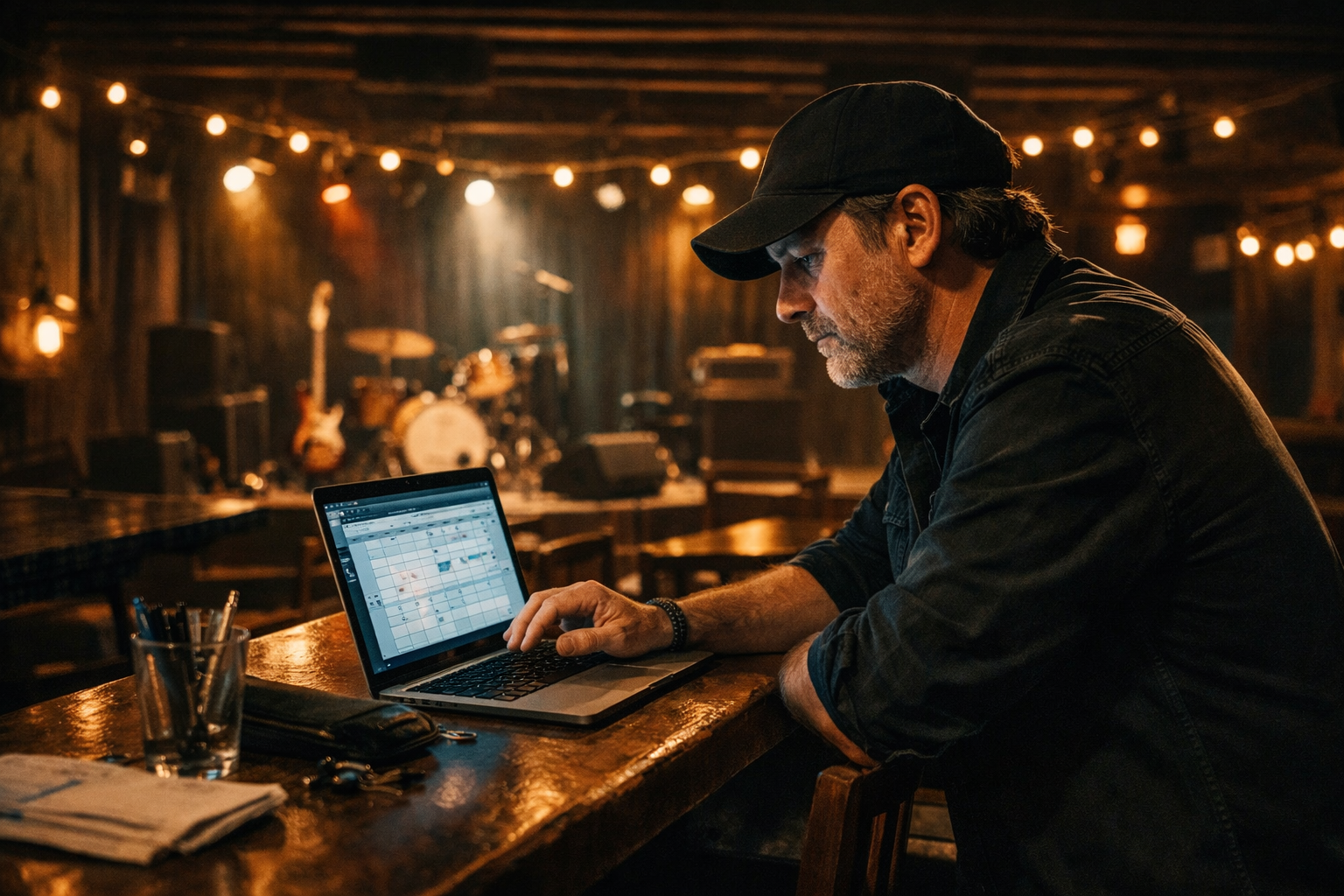
Booking gigs isn't something that just happens. Venues don't come looking for you — at least not until you've built enough of a reputation that they do. Until then, landing consistent paid shows is a skill, and like most skills it comes down to having a system and working it consistently.
Here's how working band leaders build a gig pipeline that actually produces results.
Start with venues you can realistically play
The biggest mistake bands make when starting out is aiming too high too fast. You book a 500-cap room before you've proven you can fill a 100-cap room, you tank your reputation with that venue and everyone they talk to.
Be honest about where you are right now. Ask yourself three questions:
-
What's our realistic draw on a Friday night?
-
What size room fits that draw without looking empty?
-
What genre and style of venue matches what we play?
A country cover band with a draw of 60-80 people is perfect for a bar or small venue with a 100-150 capacity. A 300-cap theater is going to feel like a ghost town and the venue won't have you back.
Start where you fit. Build from there.
Build a venue list before you start reaching out
Don't reach out to venues one at a time as you think of them. Build a list first — 20, 30, 50 venues in your market and reasonable driving distance. This changes how you work. Instead of a scattered outreach effort with no momentum, you have a pipeline you're systematically working through.
For each venue on your list, research and note:
-
Capacity and typical audience size
-
What kind of music they book
-
Whether they pay flat fees, door deals, or both
-
Who handles booking — a booking manager, the owner, or an agent
-
When they typically book (many venues book 6-8 weeks out)
This research takes time upfront but it pays off every time you reach out. A personalized email that references the venue's specific programming always outperforms a generic one.
Make contact like a professional
Cold outreach works — but only if it's done right. Most band emails to venues get ignored because they're too long, too vague, or ask for something before establishing any credibility.
A good first outreach email is short. It tells the venue who you are, what you play, roughly what your draw looks like, and asks for a conversation — not a booking. Venues are busy. They respond to bands that make it easy.
Include links to your EPK, your social media, and a video if you have one. Venue managers make decisions fast. Give them everything they need to say yes without having to ask for more.
Follow up once, about a week later, if you don't hear back. Not three times. Once.
Track every conversation
This is where most bands completely fall apart. They send emails, have conversations, get a "maybe in a few months" — and then forget. Six months later they're starting from scratch with venues they've already warmed up.
Keep a record of every venue you've contacted. Note the date, who you spoke to, what they said, and when you should follow up. If a venue said "check back in spring" — that's a warm lead sitting in your pipeline. Don't waste it by losing track of it.
This is exactly the kind of data that compounds over time. A year from now your venue relationship history is a competitive advantage. Six months of follow-up records tells you which venues are worth pursuing and which ones to stop spending time on.
Show up and be easy to work with
Venues talk to each other. Sound techs talk to each other. Promoters talk to each other. Your reputation as a band travels faster than you think.
The bands that get rebooked — and get recommended to other venues — are almost never the most talented bands. They're the ones who show up on time, do their soundcheck without drama, treat the staff well, and bring people through the door.
Be that band. Every single time.
Use your data to book smarter
After every gig, note what worked and what didn't. What was the draw? What did the room feel like? What did the venue pay and was it worth the effort? Would you play there again?
Over time this data tells you which venues are worth the relationship investment and which aren't. It tells you which nights of the week work for your draw. It tells you which markets are worth driving to and which aren't worth the gas.
Most bands have none of this because they never wrote it down. The ones who do make better decisions every month.
Build a pipeline, not a wishlist
The difference between bands that gig consistently and bands that struggle to book is almost always this: consistent bands are working a pipeline. Struggling bands are hoping something comes through.
A pipeline means you always have venues at every stage — prospects you're researching, venues you've contacted, conversations in progress, holds on the calendar, confirmed gigs coming up. When one gig is done, there's already another one in the works.
BandTopia's booking pipeline is built around exactly this model — Prospect, Inquiry, Negotiating, Confirmed, Completed. Every venue conversation has a home. Nothing falls through the cracks. Smart alerts tell you when a hold is about to expire or when it's time to follow up.
The system does the remembering so you can do the playing.
The bottom line
Booking more gigs comes down to three things — knowing which venues are the right fit for where you are right now, reaching out professionally and consistently, and keeping track of every conversation so nothing gets lost.
Do those three things and your gig calendar fills up. It's not glamorous, but it works.