
Every venue manager, promoter, and booking agent who's considering working with your band is going to look you up. The question is what they find when they do.
An Electronic Press Kit — EPK — is a single, shareable page that gives industry contacts everything they need to evaluate your band quickly. Done right, it does the selling for you before you ever get on the phone. Done wrong — or not done at all — it leaves a gap that someone else will fill with their assumptions.
Here's what belongs in a great EPK and what doesn't.
The essentials — don't skip any of these
Band name and genre This sounds obvious but you'd be surprised how many EPKs bury the basics. Your name and genre should be the first things someone sees. Be specific with genre — "country" tells a venue something. "We play a mix of everything" tells them nothing.
A great bio Two to three paragraphs that tell your band's story in a way that's compelling without being self-congratulatory. Who are you, where are you from, what makes your band worth paying attention to? Write it in third person — it reads more professionally and venues can pull quotes directly from it for their event listings.
Keep it honest. "One of the most exciting bands in the Kansas City area" means nothing coming from you. "Drawing consistent crowds of 100+ at venues across the Midwest" means something.
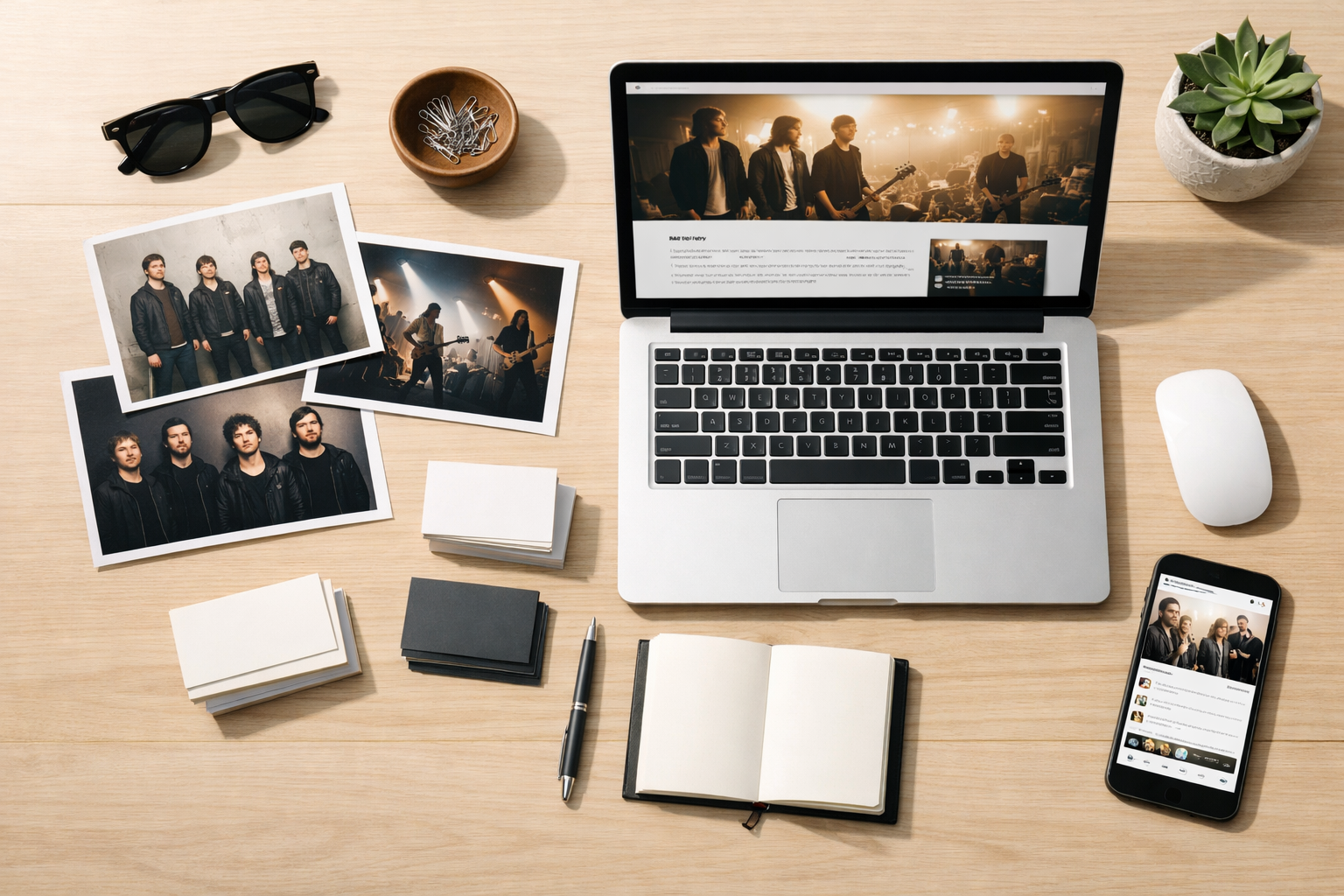
High quality photos At least two or three professional or near-professional photos. Live performance shots, band portraits, or both. These get used in venue event listings, social media promotions, and posters. Low quality photos signal a low quality act — regardless of how good you actually sound.
You don't need a $2,000 photo shoot. A friend with a decent camera and good lighting can produce usable photos. But blurry iPhone shots in a practice space won't cut it.
Video This is the most important element in your EPK and the one most bands underinvest in. Venue managers want to see what you look like performing live — the energy, the crowd response, the production level.
A good live video doesn't have to be professionally produced. A clear, well-lit phone video from a good show is better than a slick studio recording that doesn't capture what you actually sound like in a room. If you have both, include both.
Your draw and market Tell venues where you play, how far you travel, and roughly how many people you bring out. This is what they're actually evaluating. Be honest and specific — "we typically draw 75-100 people to Friday night shows in the Kansas City metro" is far more useful than "we have a strong and loyal following."
Contact information A direct email and phone number for booking inquiries. Make it easy. Venues that have to hunt for your contact info often don't bother.
Strong additions that set you apart
Notable past performances If you've played notable venues, opened for known acts, or performed at well-regarded events — mention them. One or two highlights is enough. This isn't a resume, it's a highlight reel.
Press or media mentions If you've been featured in local media, music blogs, or podcasts — include a quote or a link. Social proof from third parties carries more weight than anything you say about yourself.
Social media links and follower counts Instagram, Facebook, Spotify, YouTube — link them all. If your numbers are strong, mention them. If they're still growing, just include the links without calling attention to the numbers.
Upcoming shows A list of confirmed upcoming gigs signals that you're active and that other venues have already said yes. It also gives a prospective venue a chance to see you live before committing to a booking.
Streaming links Spotify, Apple Music, YouTube — wherever your music lives. Even for cover bands, original recordings or cover videos give venues a sense of your musicianship and production quality.
What to leave out
Your full band history going back to founding day. Nobody needs to know that your guitarist started playing at age seven. Keep the bio focused on who you are now and where you're headed.
Oversized files or attachments. Your EPK should be a link, not an email with a 40MB PDF attached. Nobody opens those.
Unverifiable claims. "Award-winning" without naming the award, "critically acclaimed" without a critic's name — these read as filler and undermine your credibility.
Outdated information. An EPK with a photo from five years ago or upcoming shows that already happened tells a venue you're not paying attention. Keep it current.
Make it a link, not a document
The best EPKs live online — a dedicated page that's always current and always accessible from any device. When a venue manager gets your email and clicks your EPK link on their phone between sets, they should see everything they need in a clean, mobile-friendly format.
BandTopia's EPK feature gives every band a public profile page with all of this built in — bio, photos, video links, social links, upcoming gig calendar, and a direct booking inquiry form that feeds straight into your booking pipeline. When a venue finds your EPK and wants to book you, they submit an inquiry and it shows up in BandTopia as a new prospect. No lost emails, no missed opportunities.
Your EPK is working even when you're not.
The bottom line
Your EPK is your band's first impression with every industry contact who looks you up. It should tell your story clearly, show what you look like performing live, and make it effortless for a venue to take the next step.
Get the essentials right first — bio, photos, video, draw, contact info. Then layer in the additions that set you apart. Keep it current. Make it a link.
Then put it in front of as many venues as possible and let it do the work.